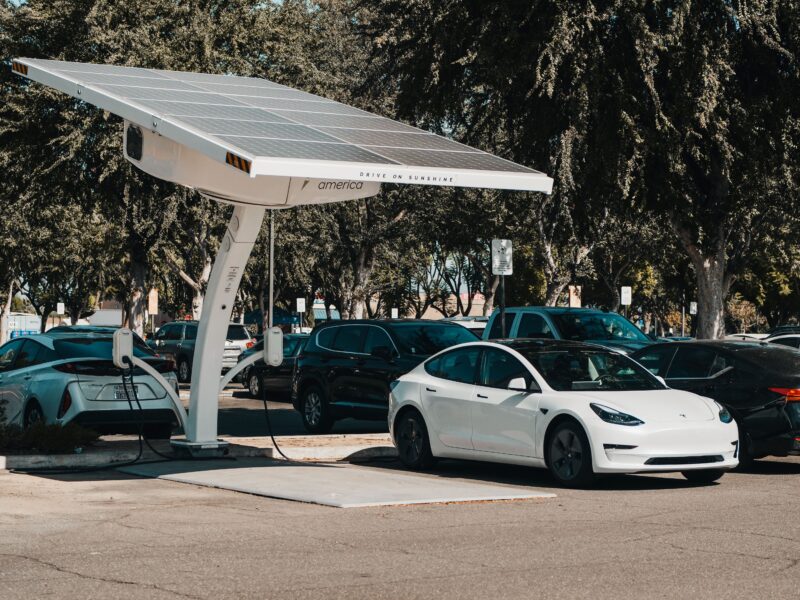
If you’re thinking about buying an electric vehicle or you just pulled one into your driveway you’re probably going to spend a lot of time thinking about charging. And honestly, it’s one of the first things every new EV owner wonders about. The good news? Once you get the hang of it, charging is actually pretty straightforward. This guide will walk you through everything: the different charging levels, which plug you need, how much it costs, and the unwritten rules of public charging stations.
The Three Levels of EV Charging
Think of EV charging like filling up a gas tank except there are three different “pump speeds” depending on where you plug in.
Level 1: The Slow-and-Steady Approach
Level 1 is just your regular old wall outlet. The one you use for your phone charger or your coffee maker. Every EV comes with a Level 1 charging cable that plugs right into it.
How fast is it? Let’s be real it’s slow. You’re looking at about 3 to 5 miles of range for every hour plugged in. If you drive a typical 60 kWh EV, charging from empty to full would take over 40 hours. That’s a long weekend.
When is it useful? Honestly, it’s your backup plan. If you’re at a friend’s house and need a little top-up, or you’re stuck somewhere without anything else Level 1 will get you moving eventually. But it’s not how you’ll want to charge every day.
Level 2: Where Most People Live
Level 2 uses a 240-volt circuit the same kind your dryer or oven uses. This is what you’ll find at most public parking garages, shopping centers, and most importantly what you’ll want at home.

Speed: You’re adding roughly 25 to 40 miles of range per hour. A full charge on a typical 60 kWh battery takes about 6 to 8 hours. Plug it in when you get home, it’s full by morning.
Best for: Daily driving, basically. Level 2 covers what most people need. If you’re commuting, running errands, and maybe a weekend trip, a Level 2 charger at home will handle your life.
Level 3 (DC Fast Charging): The Road-Trip Lifesaver
Here’s where things get exciting. DC fast charging sends power directly to the battery, skipping the car’s internal converter entirely. It’s the closest thing we have to a gas station experience.
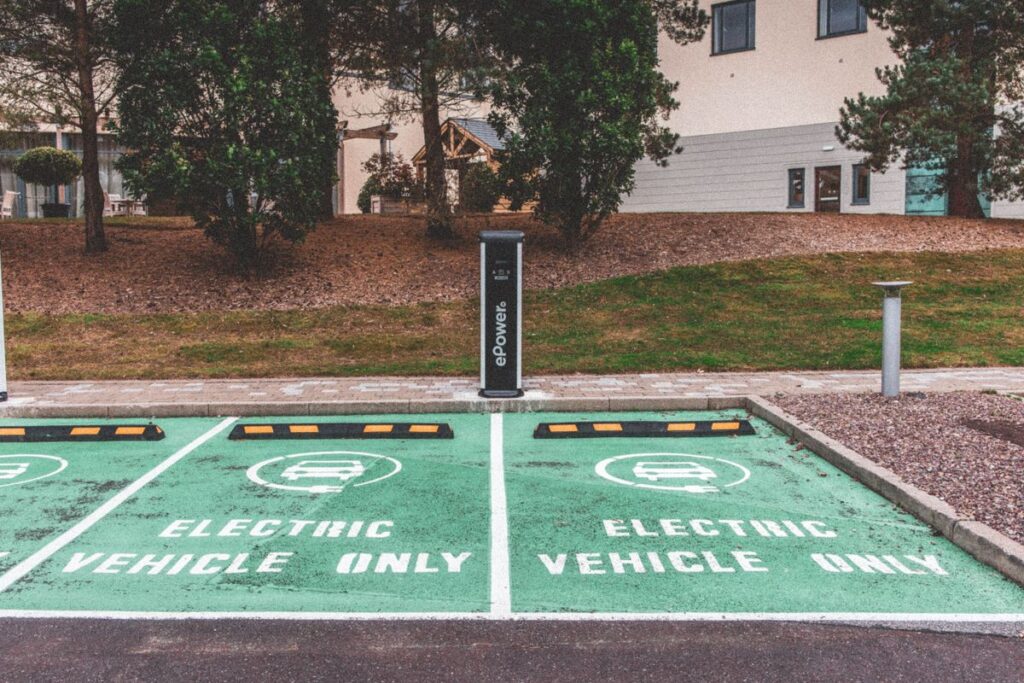
Speed: Most modern EVs can add 150 to 250 miles of range in 20 to 30 minutes. The Hyundai Ioniq 5 and Kia EV6, with their 800-volt architecture, can go from 10% to 80% in about 18 minutes. Porsche’s Taycan is similarly quick.
When to use it: Road trips, basically. It’s not something you’ll want to rely on every single day frequent DC fast charging can wear on the battery over time but for a cross-country drive, it’s a game-changer.
EV Charging Connectors Explained
Here’s where things get a little confusing, because different parts of the world use different plugs. Let me break it down.
CCS (Combined Charging System)
If you’re in North America or Europe and driving a non-Tesla EV, this is almost certainly what you’ve got. CCS adds two extra DC pins beneath the standard J1772 plug (in the U.S.) or Type 2 plug (in Europe). It’s become the default standard for basically everyone except Tesla and even that’s changing.
NACS (Tesla’s North American Charging Standard)
Tesla built its own plug and called it NACS. It’s what you find at every Tesla Supercharger. The twist? Starting in 2025, almost every major automaker announced they’re switching to NACS for their North American vehicles. Ford, GM, Volkswagen, Hyundai they’re all on board. So if you’re buying a new EV in the U.S. in the next couple of years, it’ll probably come with a NACS port and you’ll have access to Tesla’s Supercharger network.
Type 2 (Mennekes)
This is the standard AC charging plug across Europe, Australia, and much of Asia. You’ll see it everywhere in those regions. When Europeans need DC fast charging, they typically use CCS Combo 2 basically a Type 2 plug with extra DC pins underneath.
CHAdeMO
CHAdeMO was Japan’s answer to fast charging. It’s the connector you’ll find on Nissan Leafs and some Japanese-market EVs. The thing is, it’s on its way out. Networks are shifting to CCS and NACS, so finding a CHAdeMO charger is getting harder every year.
GB/T
China does its own thing, as usual. If you’re buying or importing a Chinese EV, this is the plug you’ll be working with. GB/T handles both AC and DC charging in China.
Charging at Home: Everything You Need to Know
Home charging is the part of EV ownership that actually feels like magic. You pull into your driveway, plug in, and wake up to a full battery. No gas station runs, no standing in the cold, no surprise at the pump.
Do You Actually Need a Dedicated Charger?
If you have a garage or a driveway where you park every night, yes, absolutely. A Level 2 home charger drops your charging time from 40-plus hours on Level 1 to about 6 to 8 hours. That’s the difference between “maybe I’ll have enough” and “I’m always full in the morning.”
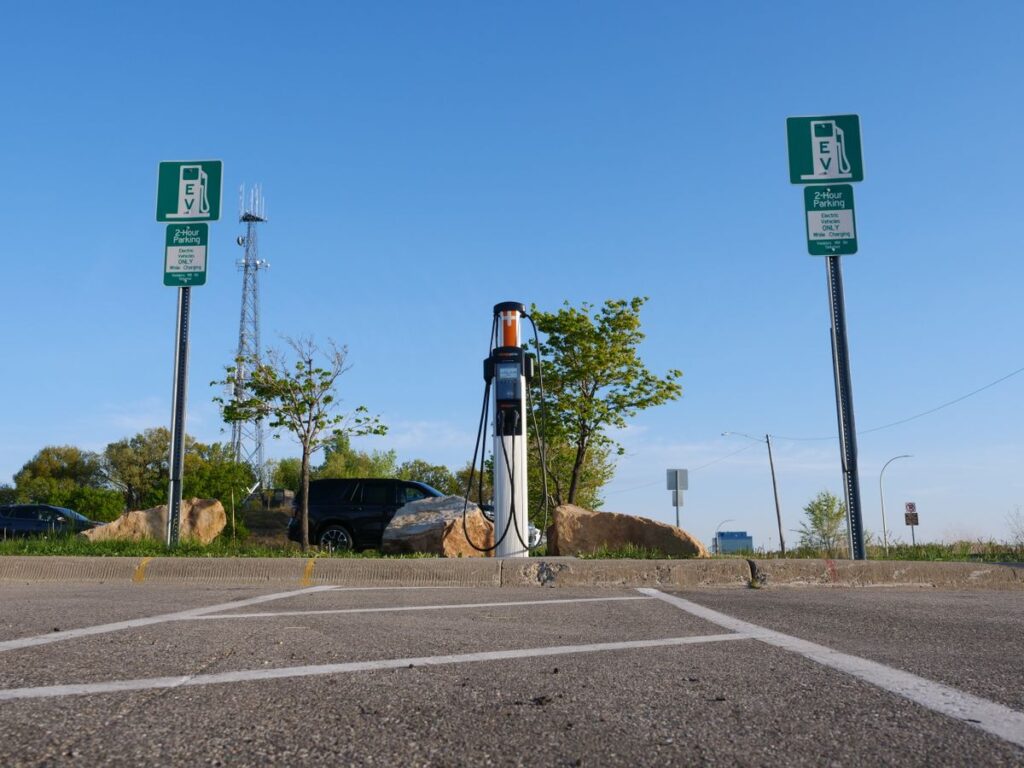
Popular Level 2 chargers include the ChargePoint Home Flex, Wallbox Pulsar Plus, and Tesla Wall Connector (which works with non-Tesla EVs using a cheap adapter). Hardware will run you roughly $400 to $800 USD (€370–€740 / ₹33,000–₹66,000 / A$620–A$1,240).
Installation: What It Actually Costs
The charger itself is just the beginning. You’ll need an electrician to wire up a dedicated 240-volt circuit. Here’s a rough idea of what to budget:
- Panel nearby (garage or carport): $300 to $800 USD (€275–€740 / ₹25,000–₹66,000 / A$465–A$1,240) for installation
- Wiring needs to run a long distance: $800 to $2,000+ USD (€740–€1,840 / ₹66,000–₹1,66,000 / A$1,240–A$3,100+)
- Full electrical panel upgrade: add $1,500 to $3,000 USD (€1,380–€2,760 / ₹1,25,000–₹2,50,000 / A$2,325–A$4,650)
Here’s the good news many utility companies and government programs offer rebates for home charger installation. In the U.S., the Inflation Reduction Act offers a 30% tax credit (up to $1,000 USD / €920 / ₹83,000 / A$1,550) for qualifying chargers and installation. Worth checking what’s available in your area before you commit.
If You Live in an Apartment
No garage? You park on the street or in a shared lot. You can still own an EV it just takes a bit more planning:
- Use the Level 1 cable that came with your car. It’ll work, just slowly. Overnight charging on a standard outlet might give you 30 to 40 miles of range enough for many commuters.
- Ask your landlord or building manager about installing a shared charger. A lot of properties are doing this now to attract tenants.
- Map out public chargers near you. Apps like PlugShare and ChargePoint will show what’s within walking distance.
Public Charging Networks: Which One Should You Use?
When you can’t charge at home, these are the networks you’ll be relying on. Here’s how they stack up.

Tesla Supercharger
Tesla’s network is still the benchmark. Stations are everywhere across the U.S. and Europe, the connectors work with almost every new EV, and the experience is seamless plug in, the car recognizes it, charging starts. No app, no fumbling with payment. They’re all Level 3, so you’re only ever getting a quick top-up.
ChargePoint
ChargePoint has the largest public network globally, with over 30,000 stations across North America. They offer both Level 2 and DC fast charging. Their app is genuinely one of the better ones it shows real-time station availability, lets you filter by connector type, and handles payment smoothly.
Electrify America
Born from the Volkswagen diesel settlement, Electrify America has built an impressive DC fast-charging network across the U.S. Their chargers go up to 350 kW and work with both CCS and NACS vehicles. Stations are popping up at Walmart shopping centers and along major highway corridors.
IONITY (Europe)
IONITY is backed by BMW, Mercedes, Volkswagen, Ford, and Hyundai. Their 350 kW chargers are aimed at long-distance EV travel across Europe and are expanding steadily along the continent’s highway network.
EVgo
EVgo runs DC fast-charging stations across the U.S. They work with CCS and NACS and have partnerships with automakers like GM and Nissan that give discounted charging rates to their customers.
One practical tip: download PlugShare alongside whatever your preferred network’s app is. PlugShare shows every charger from every network on one map, includes user-submitted photos and reviews, and most importantly tells you whether a charger is actually working. The official apps almost never show broken stations reliably.
How Long Does It Actually Take to Charge?
This is the question everyone asks, so let’s get into the real numbers.
Charging Times by Popular EV (10% to 80%)
These are approximate times at a Level 3 DC fast charger:
- Tesla Model 3 Highland: ~25 minutes (250 kW max)
- Tesla Model Y: ~27 minutes (250 kW max)
- Hyundai Ioniq 5: ~18 minutes (800-volt platform, 350 kW max)
- Kia EV6: ~18 minutes (800-volt platform, 350 kW max)
- Porsche Taycan: ~22.5 minutes (800-volt platform, 270 kW max)
- Ford Mustang Mach-E: ~36 minutes (150 kW max)
- Chevrolet Equinox EV: ~47 minutes (150 kW max)
- Volkswagen ID.4: ~35 minutes (170 kW max)
- BMW iX: ~31 minutes (195 kW max)
- Mercedes EQS: ~30 minutes (170 kW max)
One thing worth knowing: the 10% to 80% figure is what most brands quote because charging slows down intentionally above 80% to protect the battery. If you need a full charge during a road trip, that last 20% can take as long as the first 60%. Plan accordingly.
Why Two EVs Charge Differently on the Same Charger
Ever noticed that your friend’s EV fills up way faster than yours on the same charger? Here’s why:
- Battery size: A smaller battery fills faster, even at the same charging speed. Simple math.
- Temperature: Cold batteries charge slowly. Most modern EVs will pre-warm or pre-cool the battery when you navigate to a fast charger so use the car’s built-in navigation, not just the charger’s app, to trigger this.
- Starting charge level: Charging from 10% to 50% is much faster than from 70% to 90%. The charger intentionally slows down as the battery fills.
- Charger power limit: A 150 kW charger won’t make a 350 kW-capable car charge faster. The charger is the bottleneck.
- Shared power: At many stations, one charger serves two vehicles at once. If you’re getting half the expected speed, another car is probably sharing the power.

Tips That Will Actually Make Your Life Easier
After reading a hundred EV forum posts and talking to owners, here are the tips that come up most often and actually work:
- Pre-condition your battery before fast charging. If your car has this feature (most do), use it. Navigating to a charger in the car’s system will warm or cool the battery to the ideal temperature. It makes a real difference in charging speed.
- Keep it between 20% and 80% for daily use. Lithium-ion batteries don’t like being at 100% or near empty for long periods. For your everyday commute and errands, staying in that 20–80% window will keep your battery healthier for years.
- Use fast charging for trips, not daily life. It’s fine for road trips, but if you’re plugging into a DC fast charger every single day, that’s harder on the battery than Level 2 at home. Mix it up.
- Plan road trip stops with an app like ABRP (A Better Routeplanner). It calculates charging stops based on your exact car, your speed, the weather, elevation changes, and which chargers are actually working. Way better than guessing.
- Charge overnight when rates are cheap. Many utilities offer discounted electricity rates at night. Most EVs let you schedule when charging starts set it up once and forget it.
- Keep your charging port clean. A dusty or corroded charging port is one of the most common reasons for slow or failed charging sessions. A quick wipe-down with a dry cloth goes a long way.
- Use the right app, but keep PlugShare as backup. Most networks have their own app, and that’s fine for daily use. But PlugShare is your safety net it shows every charger from every network on one map, and the community reports broken ones.
- Check availability before you drive to a charger. Nothing worse than driving 20 minutes to a station only to find both connectors taken or the whole thing offline. A quick check in the app saves you the trip.
- Don’t be that person who unplugs someone else. If a station is full, wait. Or move on to the next one. Basic courtesy.
- Set up your payment account at home, not at 2 AM on the side of a highway. Some networks make you create an account and enter a credit card before you can charge. Do this while you’re on your couch, not while you’re exhausted on a road trip.
Common EV Charging Myths, Busted
There’s a lot of bad information floating around. Let’s clear some of it up.
Myth 1: “You need a special outlet to charge an EV.” Nope. Every EV comes with a Level 1 cable that works in any standard wall outlet. A dedicated 240-volt charger is way more convenient, but it’s not required.
Myth 2: “Fast charging destroys your battery.” It’s not that simple. The occasional fast charge once a week or on road trips really isn’t going to hurt anything. The bigger enemy is regularly charging to 100% and sitting there. Keep it between 20% and 80% for daily use and you’ll be fine.
Myth 3: “You can’t charge an EV in the rain.” Actually, you can. The charging port and connector are fully weather-sealed. You could charge in a downpour, in snow, or on a 40°C (104°F) day and it’ll work just fine. The system is designed for it.
Myth 4: “All public charging is expensive.” Many public Level 2 chargers are completely free malls, hotels, and city parking lots often offer them as an amenity. DC fast charging does cost money, but rates vary a lot. In the U.S., you’re typically looking at $0.20 to $0.60 per kWh (€0.18–€0.55 / ₹17–₹50 / A$0.31–A$0.93). At those rates, a full charge on a 60 kWh battery costs roughly $12 to $36 (€11–€33 / ₹1,000–₹3,000 / A$19–A$56).
Myth 5: “You can’t own an EV if you live in an apartment.” You absolutely can. It’s less convenient than home charging, sure, but workplace chargers, public stations, and even asking your landlord to install a shared charger are all real options.
What’s Coming Next in EV Charging
The technology is moving fast. Here’s what’s on the horizon.
- 350 kW+ ultra-fast charging: Already available on some cars, this will soon become the standard. We’re talking 200+ miles of range added in under 15 minutes.
- Solid-state batteries: Expected in production EVs around 2027–2028. They’ll charge faster, hold more energy, and last longer than today’s lithium-ion cells.
- Wireless charging: Park over a pad and your car charges without plugging in. Static wireless is being tested in cities right now. Dynamic wireless charging while you drive is being piloted on highways in France and Sweden.
- Vehicle-to-grid (V2G): Your EV could eventually power your home during peak electricity rates or even sell energy back to the grid. Bidirectional charging already exists on models like the Ford F-150 Lightning and Nissan Leaf.
- NACS standardization in North America: As every automaker switches to Tesla’s plug, the whole CCS vs. NACS confusion will finally fade away. One plug to rule them all.
FAQ
On average, between $10 and $20 USD (€9–€18 / ₹830–₹1,660 / A$16–A$31) for a full battery, depending on your electricity rate and battery size. At the U.S. average residential rate of about $0.16 per kWh (€0.15 / ₹13 / A$0.25), a 60 kWh battery costs roughly $9.60 (€8.80 / ₹800 / A$15) for a full charge.
Yes. The equipment is designed for outdoor use. Waterproof, weather-sealed, fully tested. Rain, snow, 40°C heat bring it on.
Not necessarily. Every EV ships with a Level 1 cable that works in any standard 120-volt outlet. If you want Level 2, you’ll need a 240-volt circuit installed (like what your dryer uses), and that requires an electrician.
Depends entirely on the charger. Level 1: 30 to 40 hours. Level 2: 6 to 10 hours. Level 3 (DC fast): 20 to 40 minutes for 10% to 80%.
Not from occasional use. Think of it like eating fast food fine once in a while, not great as an everyday habit. The real long-term damage comes from regularly charging to 100% and keeping the battery pegged at high levels. Stick to 20–80% for daily charging and you’re golden.
The car stops, just like a gas car. You’ll need roadside assistance or a flatbed tow to the nearest charger. Some EV makers include this as part of their roadside assistance package, so it’s worth knowing what your warranty covers.

Comments 21