
A major milestone for the future of transportation quietly unfolded this week in Abu Dhabi. Instead of a dramatic reveal or a futuristic prototype on stage, the moment arrived in the form of a sleek electric vehicle pulling up to collect a passenger all on its own. Uber, one of the world’s largest ride-hailing platforms, and WeRide, a global leader in autonomous driving technology, officially launched a fully driverless robotaxi service for the general public in the capital of the United Arab Emirates.
This rollout marks a historic first for the Middle East. It showcases how the region is rapidly positioning itself at the forefront of electric mobility and autonomous driving innovation. Passengers can now order a ride through the Uber app and step directly into an electric vehicle with no human behind the wheel no driver, no safety operator, no remote supervision. It’s a true hands-off, self-driving experience happening in real-world traffic.

Booking a ride in one of these autonomous EVs is surprisingly simple. Riders open the Uber app, choose familiar categories such as UberX or Uber Comfort, and if their pickup and drop-off points fall within WeRide’s designated autonomous driving zone, they may get matched with a WeRide GXR Robotaxi. For those eager to experience the cutting edge of mobility, Uber has even added a dedicated “Autonomous” option to increase the likelihood of being paired with a fully driverless vehicle.
These robotaxis are already navigating the streets of Abu Dhabi’s modern urban landscape, a sight that critics once dismissed as unrealistic or decades away. Yet the vehicles blend naturally into the city’s environment, signaling that the once-theoretical future of automated transport has arrived sooner than expected.

The launch of full driverless operations is the result of a careful, step-by-step process that began with a partnership announcement in September 2024. Within three months, the companies rolled out supervised robotaxi rides, with a trained safety operator inside each car.
These early runs allowed Uber and WeRide to gather essential data, fine-tune the vehicle systems, and confirm the platform’s readiness for a completely human-free experience. After months of testing, validation, and route mapping, the last layer of human oversight was removed unlocking true autonomous mobility for everyday users.
Behind the scenes, operating an entire fleet of autonomous EVs requires a sophisticated division of responsibilities. Uber manages the rider-facing experience, including scheduling rides, customer support, and overall fleet coordination. Meanwhile, WeRide handles the autonomous driving technology itself training, improving, and maintaining the software stack that allows each robotaxi to perceive its environment and safely navigate traffic.
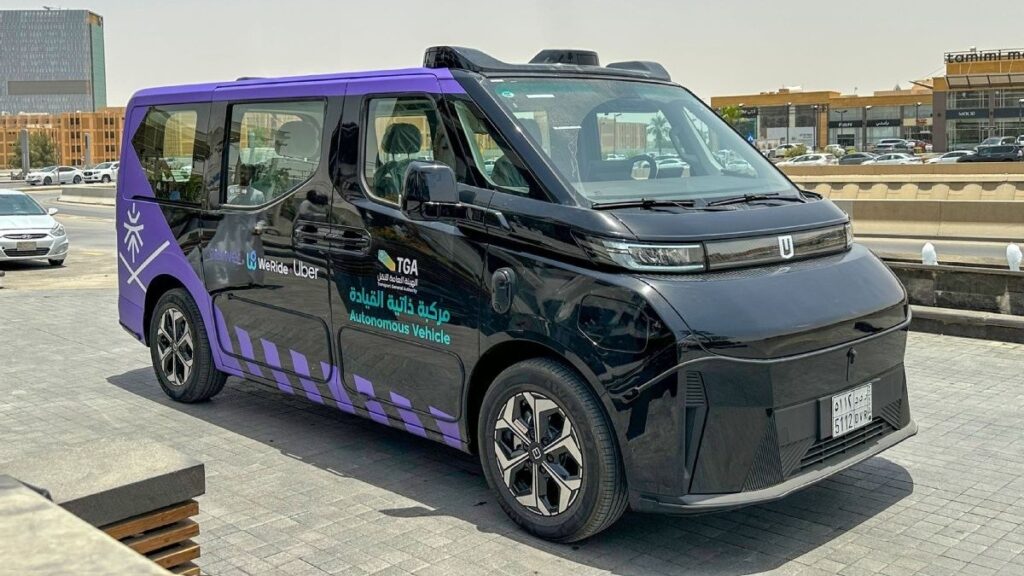
Keeping a large number of electric robotaxis running around the clock also demands hands-on operational work. For that reason, Tawasul Transport has been brought in as a strategic partner. Their role covers the physical side of the fleet: cleaning vehicles, performing routine checks, managing depot operations, and charging the EVs efficiently so they remain available throughout the day and night. This teamwork between Uber, WeRide, and Tawasul ensures both the digital intelligence and physical reliability of the service remain seamless.
The Abu Dhabi deployment is only the beginning of a far-reaching plan. Uber and WeRide have already confirmed that the next Middle Eastern city to receive driverless robotaxis will be Dubai, one of the world’s fastest-growing tech hubs. But the ambitions extend far beyond the Gulf region.
Over the next five years, the two companies aim to introduce fully driverless robotaxi services in 15 additional cities around the world. Several major European metropolitan areas are already being considered, marking the start of a global shift toward widespread autonomous EV mobility.
This Middle Eastern debut represents a significant moment not only for the ride-hailing and tech industries but for the entire automotive world. It demonstrates that autonomous electric vehicles have moved past the stage of theoretical concepts and controlled testing environments.
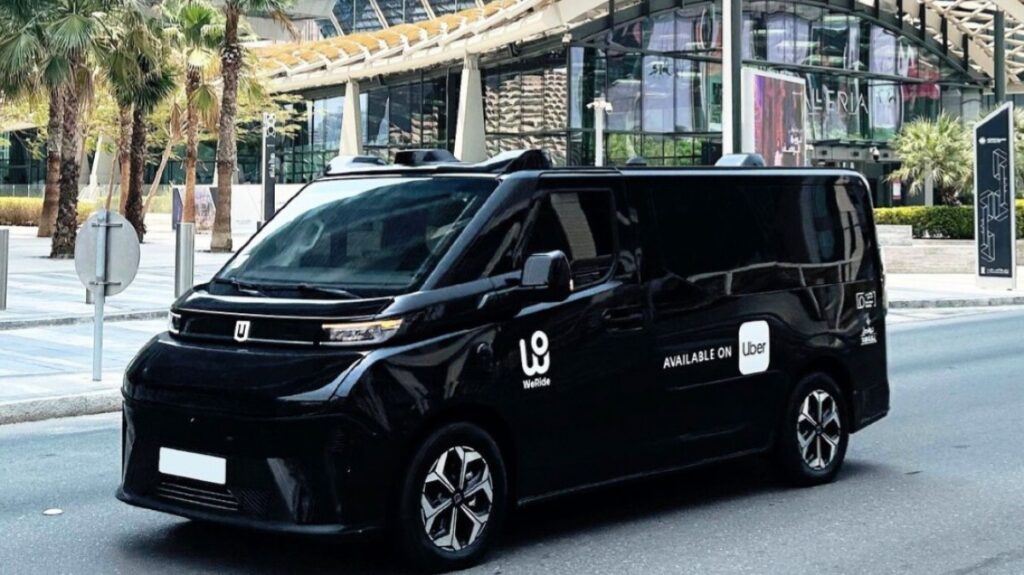
They are now being used by real passengers, on real streets, in one of the most advanced cities on the planet. The success of this rollout hints at how everyday commuting may evolve in the near future, with safer, cleaner, and more efficient transport options available at the tap of a button.
As the technology continues to mature and more cities across the globe look for sustainable transit solutions, driverless EV fleets could become a normal sight. For now, however, the launch in Abu Dhabi stands as a bold glimpse into the next chapter of urban mobility one where cars drive themselves and the boundaries of innovation continue to shift.
What are your thoughts on Uber and WeRide bringing fully driverless robotaxis to Abu Dhabi. Do you think autonomous EVs are ready to become a mainstream form of transportation? Let us know in the comments below!



Hey there! I’ve been reading your site for a while now and finally got the bravery to go ahead and give you a shout out from Austin Texas! Just wanted to tell you keep up the good work!